



CRIME ON THE ROPES
Publishers Weekly Talks with Eddie Muller
December 9, 2002
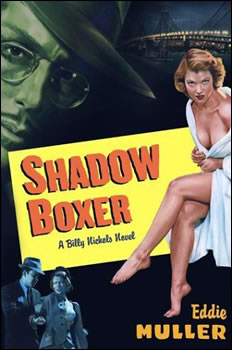
PW: You have a solid one-two punch this season with Shadow Boxer and a poster book, The Art of Noir. How do you feel about that?
EM: I feel great about it, but I'd be lying if I didn't say that all of the non-fiction I have done is a set-up for the novels. My real interest is in fiction, in writing these novels.
PW: How closely is your protagonist, Billy Nichols, modeled on your dad?
EM: The details are all very different, but overall it's pretty damn close. As far as I know, he never buried a body in Golden Gate Park. In terms of attitude and style, the way he interacts with people, very close. My dad was employed by the San Francisco Examiner for 52 years. He was a copy boy and then he was a boxing writer. That was the only job he ever held in his life, writing about boxing for theExaminer. I go back and comb through his columns, just to glean details and ideas. The veracity of the boxing world in these books is really strong, down to the dates of fights. So much of that is biographical, having to do with my father and that he actually lived in that world. It wasn't until I did that first film noir book, Dark City, that I really understood what I pretty much sitting in my lap as a potential hard-boiled series. Once I had done that book it all came back to me as a noir movie.
PW: The Billy Nichols books are nicely subversive of the "tough guy" school of writing.
EM: Completely intentional. I can do these subversive elements, undercutting the expectations that people have about the tough guy and the boxing dodge. Billy's a henpecked husband, works nine-to-five and tries to stay out of trouble and this shit just kind of happens to him.
PW: Your use of 1940s San Francisco is an especially nice aspect to this series.
EM: I have complete affinity for that period. Because of my dad's cronies. I just soaked that stuff up.
PW: Have you planned more novels with Billy Nichols?
EM: Yes, indeed. They are planned. I have all kinds of ideas. I'm thinking of taking Billy to Los Angeles in the next book. He's going to cover the featherweight title fight that actually happened at that date. I'd love to be able to skip five and six years at a time, so that the background keeps changing as the sport changes, as television makes an impact in boxing, as black fighters become more prevalent in the sport. All that stuff I'd like to see in the background of these stories, and I'd like to see Billy get older. Let's hope I get to keep writing them.
PW: How do you like the covers Scribner is giving these novels?
EM: Fantastic. The covers are great. John Fulbrook is the designer and he deserves all the credit. I was shocked when I saw the first one, because I didn't have anything to do with it, and the guy actually looks like my father. That pulpy, movie-poster, paperback jacket look, everybody loves it, but there's a certain highbrow resistance to it. I think that some authors would be turned off, they would think the book is maybe a little ghettoized, because it looks too much like a pulp mystery. Not me. I love it.
PW: Have you thought of doing an out-of-series noir novel more like David Goodis and Jim Thompson, bleak and doomed?
EM: Yes. I have a couple of ideas I've started noodling around with. Most people wonder where's the script for a film noir movie. For some weird reason, I still like the printed word. I think you can capture the real essence of noir today more on the page than you can on the screen.
—Don Herron